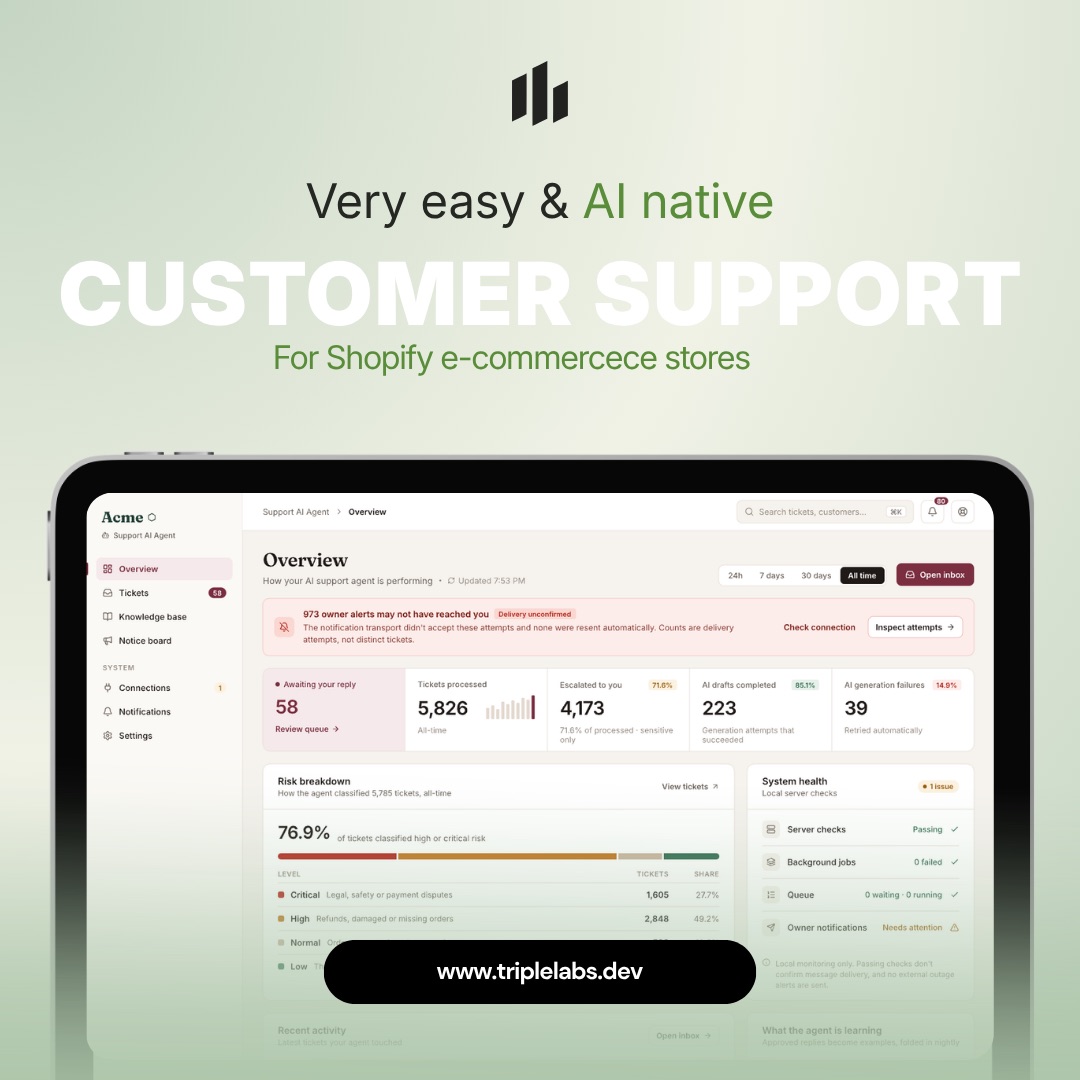
The example
This studio concept imagines a small online shop receiving common order questions through its support inbox. A teammate opens a message, checks the order in Shopify, searches the store's current delivery policy, and writes a reply. The concept brings those steps into one review flow so the teammate can see the request, the order facts, and a suggested response together.
The example is synthetic. It does not represent a client engagement, a deployed product, a live Shopify connection, or a measured business result. The image is an illustration for the walkthrough. It should not be read as proof that a working support tool exists.
Intended workflow
A support message begins the process. The system can suggest a category such as delivery status, product question, or return request. If the message contains an order reference, an approved read-only connection could retrieve the current order information and display the relevant policy article. A drafting step could prepare a short reply using those sources and label any missing details. The teammate checks that the records belong to the right customer, reviews the wording, edits it when needed, and chooses whether to send it.
The workflow should stop and ask for a person when an order cannot be matched, the records disagree, the customer disputes a delivery, or the request involves a refund, payment, account access, or an exception to policy. A useful handoff gives the teammate the message, the information checked, and the reason the system stopped. The person remains responsible for decisions and the final customer message.
Human checkpoints
A teammate approves every draft before it is sent. They can verify the order status against Shopify and confirm that the policy source is current. If the system has not found reliable support for a claim, it should identify that gap instead of filling it with a guess. A supervisor or designated policy owner can decide how to handle exceptions and update the approved knowledge source.
Before a real implementation, the team would need to agree which inbox, records, fields, permissions, policies, and retention rules apply. The system should request only the access needed for its task, and the team should know where run history and failures can be reviewed. A pause control and a manual process keep support moving if an integration is unavailable.
Limits of this concept
This walkthrough does not demonstrate an actual Shopify installation, API connection, customer conversation, response time, savings, accuracy rate, or production readiness. It does not decide eligibility for returns, refunds, delivery claims, or any other store policy. It does not send messages, change orders, or modify customer data.
Any future build would need to be tested against the store's real policies, account permissions, sample cases, and support team's review expectations. The concept is a way to discuss workflow boundaries and approval points; it is not a case study or a promise of results.