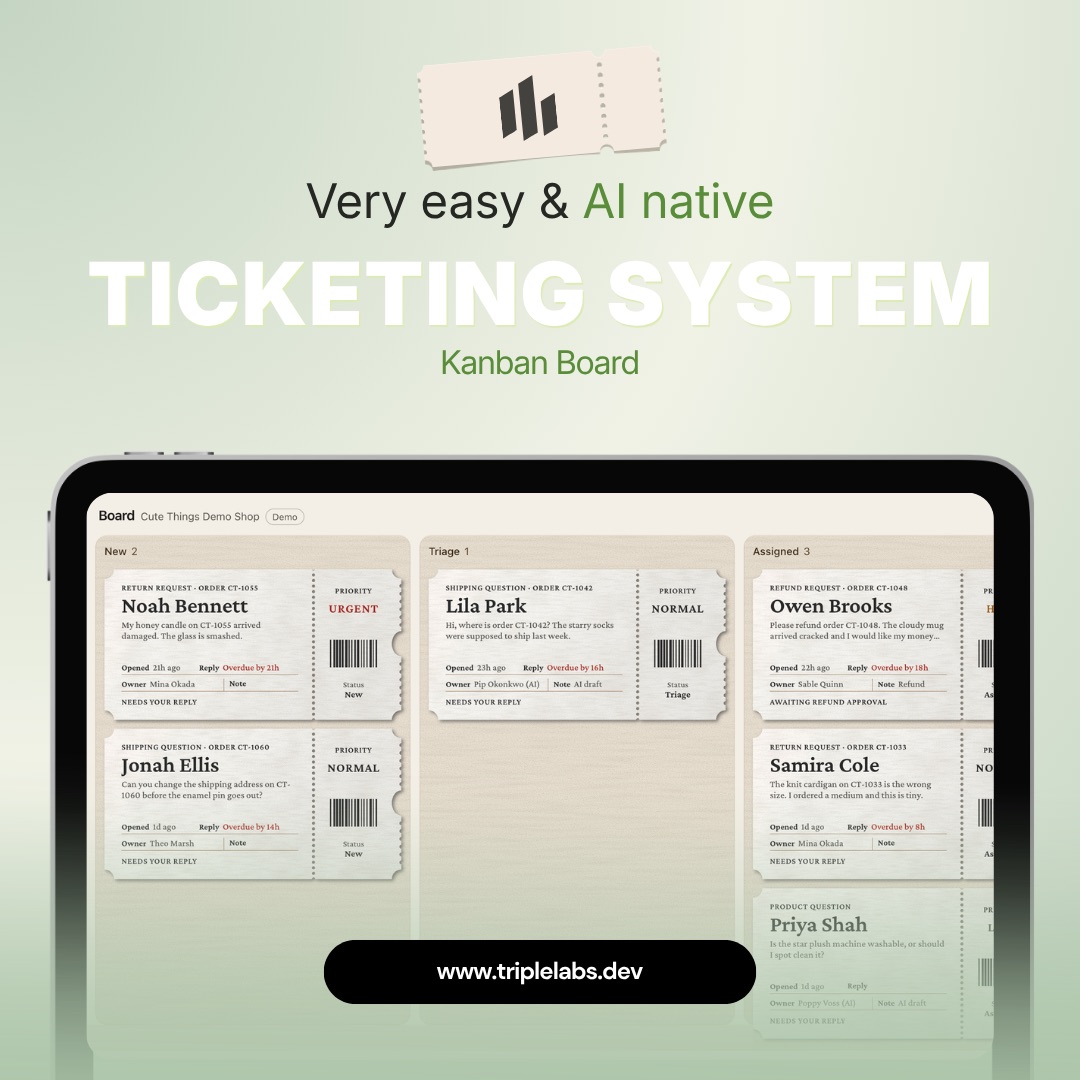
The example
This concept imagines a small team handling requests from several channels. Work arrives in email or through a form, and people need a shared view of what is new, who owns it, what is waiting on someone else, and what has been completed. The example board is a planning model: it gives each request a title, source, owner, status, due-date field when one is approved, and a link back to the original context.
The walkthrough is synthetic and illustrative. It is not a working task board, connected project-management account, client project, or measured result. No real team data has been loaded, and no tasks have been created or assigned.
Intended workflow
A request enters through an agreed intake route. The system records the original source, checks for required details, and creates a proposed task. A simple rule can assign a queue based on a known topic or request type. An optional AI step may summarize a long description or suggest a category, but it should preserve the original text so a person can compare the summary with the source.
A coordinator reviews new items, confirms whether each is in scope, sets an owner, and chooses a priority according to the team's agreed rules. The owner updates the task as work progresses and leaves a short note when it is blocked or needs a decision. Completion means the request has reached a defined outcome and the relevant person has checked it; moving a card into a finished column alone should not imply that the requester received a result.
Human checkpoints
A team lead owns the rules for categories and priority. People confirm assignments and deadlines instead of relying on a model to decide which colleague has capacity. The task owner checks any generated summary, asks for missing information, and records a blocker. A manager or policy owner handles conflicts, work outside the team's scope, and changes to commitments.
A person also reviews access to the board. Only teammates who need a request should see its details, and sensitive information should not be copied into a general-purpose task description. The team chooses what information belongs on the board, how long it should be kept, and where the source record remains authoritative.
Limits of this concept
This example does not connect to email, a form, a calendar, or a project-management product. It does not assign work, calculate capacity, recommend priorities from real team activity, send reminders, or verify completion. It does not establish a delivery timeline or claim to reduce missed requests.
Before implementation, the team would need to choose a task system, agree status definitions and ownership rules, decide how to handle duplicate requests, and test permissions and notifications. The team should review the board with the people who will use it and change the design when it hides important context or adds unnecessary administration. This is a concept walkthrough for discussing a possible process, not a case study or proof that an operational product has been built.